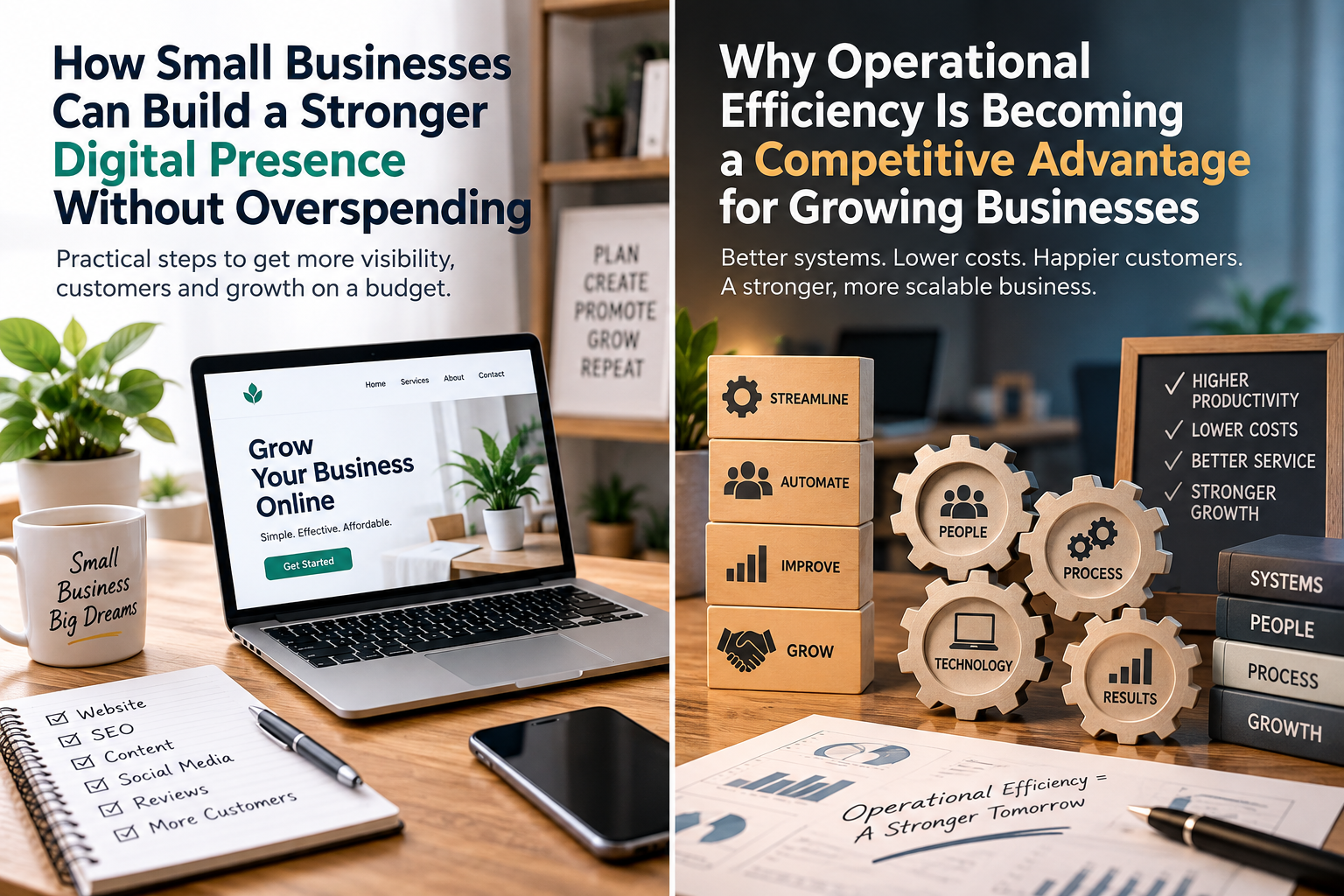
A strong digital presence is no longer limited to large companies with big marketing budgets. Small businesses can also build visibility online, attract new customers and improve credibility without spending heavily on complicated tools or expensive campaigns.
The key is not doing everything at once.
A more effective approach is to focus on the few digital channels that matter most to customers and make those channels work properly.
Start With a Clear Website
For many customers, a website is still the first place where they check whether a business looks reliable.
A small business website does not need dozens of pages.
It needs to answer the main questions visitors have.
These usually include:
- What does the business offer?
- Who is the service for?
- Where does the business operate?
- How can someone make contact?
- Why should a visitor trust the company?
Clear information is more useful than complicated design.
A simple, fast website with accurate contact details, service pages and a professional appearance can create a stronger impression than a visually complex website that is difficult to use.
Focus on Search Visibility
Search engines remain an important source of customers for many businesses.
Small companies do not always need to compete for broad national keywords.
Local and specific searches can often be more useful.
For example, a local service business may benefit from targeting searches related to its service and location rather than attempting to rank for a highly competitive generic term.
Keeping business information consistent across the website and relevant directories can also improve visibility.
Publish Useful Content
Content does not need to be produced every day.
A few genuinely useful articles can often provide more value than large volumes of low-quality posts.
Businesses can publish content around:
- common customer questions
- pricing considerations
- buying guides
- maintenance advice
- industry changes
- comparisons
- practical tips
This type of content can help potential customers understand the business and may also support organic search visibility.
Use Social Media Selectively
Many businesses feel pressure to maintain accounts on every social platform.
That is rarely necessary.
It is usually better to choose one or two platforms where the target audience is already active.
A professional service company may benefit more from LinkedIn, while a visually focused local business may get stronger results from Instagram or similar platforms.
The important point is consistency.
An inactive profile with outdated information can create a worse impression than having fewer active channels.
Build Trust With Reviews and Proof
Customers often look for evidence before contacting a business.
Reviews, testimonials, case studies and examples of completed work can help provide that confidence.
Businesses should make it easy for satisfied customers to leave genuine reviews.
Fake reviews or exaggerated claims can damage credibility.
Authentic customer feedback is usually more valuable.
Keep Marketing Costs Measurable
Small businesses should know where enquiries come from.
Even basic tracking can help identify whether customers are finding the business through search engines, referrals, social media or advertising.
Without this information, marketing spending can become difficult to evaluate.
Businesses do not need sophisticated analytics systems at the beginning.
Tracking a few important metrics is enough.
These might include:
- website enquiries
- phone calls
- booking requests
- conversion rate
- cost per lead
Avoid Paying for Too Many Tools
Digital marketing software can quickly become expensive.
A business may end up paying for email tools, SEO platforms, social scheduling software, analytics products and website services.
Before purchasing a tool, it is worth asking whether it solves a real problem.
Many smaller businesses can begin with a relatively simple technology stack and add tools only when the need becomes clear.
Consistency Matters More Than Complexity
Building a digital presence is usually a gradual process.
Businesses that maintain accurate information, publish useful content, respond to customers and keep their website updated often build stronger visibility over time.
Success does not always require a large marketing budget.
In many cases, a focused strategy and consistent execution can be more valuable than expensive software or aggressive advertising.

