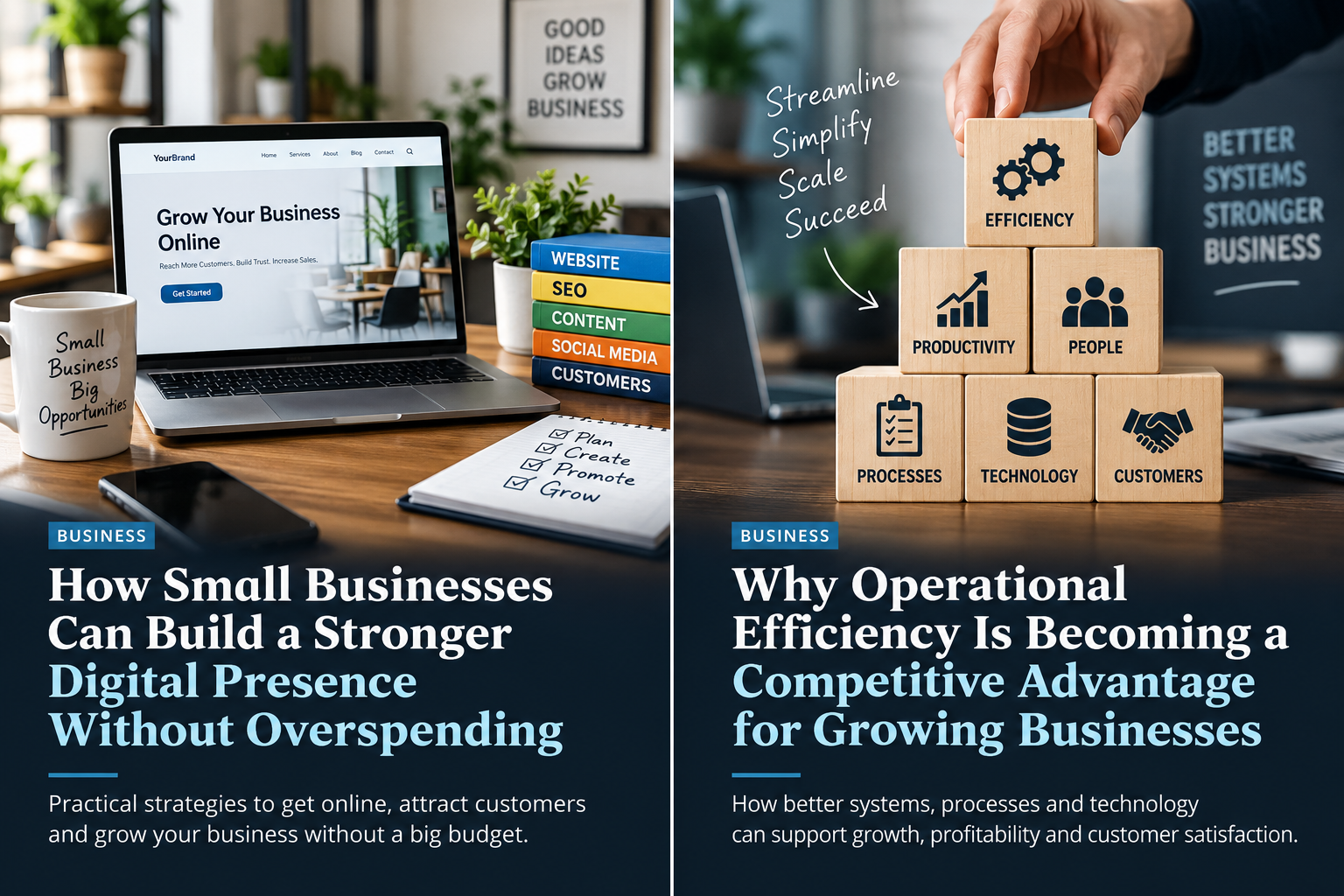
Growth is usually seen as a positive sign for a business.
More customers, higher revenue and a larger team can indicate that a company is moving in the right direction.
However, growth can also expose weaknesses.
Processes that work when a business has ten customers may become difficult to manage when it has hundreds.
This is why operational efficiency becomes increasingly important as a company expands.
Growth Creates Complexity
A small business often begins with simple processes.
The owner may handle customer communication, payments, purchasing and operations directly.
As the company grows, responsibilities become distributed across employees and departments.
This creates more handoffs, more information and more opportunities for mistakes.
Without clear systems, growth can increase costs faster than revenue.
Repetitive Work Can Slow a Business Down
Many businesses lose time through repetitive administrative tasks.
Examples include:
- entering the same information into multiple systems
- manually preparing reports
- repeatedly answering common customer questions
- processing invoices individually
- updating spreadsheets
- following up on routine requests
Some of these tasks can be automated or simplified.
Removing unnecessary manual work allows employees to focus on activities that create more value.
Clear Processes Improve Consistency
Customers expect a consistent experience.
They do not want service quality to depend on which employee happens to handle their request.
Documented processes can help businesses maintain standards.
A simple operating procedure may explain how enquiries are handled, how orders are processed or how customer complaints are escalated.
This reduces confusion and makes employee training easier.
Technology Should Support the Process
Businesses sometimes purchase software before understanding the process they are trying to improve.
This can create additional complexity.
A better approach is to identify the bottleneck first.
For example, if customer enquiries are being missed, the solution may involve improving the communication process rather than simply buying more software.
Technology is most effective when it supports a clear workflow.
Inventory and Cash Flow Need Attention
Operational efficiency is especially important for businesses that manage physical products.
Too much inventory can tie up cash.
Too little inventory can lead to missed sales.
Businesses need reliable information about demand, stock levels and supplier lead times.
Similar discipline is useful for cash flow.
A profitable business can still face problems if payments arrive slowly while expenses must be paid immediately.
Strong operations include financial visibility as well as productivity.
Employee Time Is a Valuable Resource
Businesses often measure equipment costs carefully but pay less attention to wasted employee time.
Small inefficiencies repeated every day can become expensive.
For example, if several employees each spend thirty minutes every day searching for information, the total annual cost can become significant.
Improving access to documents, creating shared systems and simplifying approval processes can reduce this waste.
Better Operations Can Improve Customer Experience
Operational efficiency is not only about reducing costs.
It can also improve customer service.
Faster response times, accurate information and reliable delivery create a better experience.
When internal systems work well, employees are better able to help customers.
This can become an important competitive advantage.
Measure the Right Things
Businesses should track a small number of operational indicators.
Depending on the company, these might include:
- order processing time
- response time
- customer complaints
- inventory turnover
- delivery delays
- employee productivity
- operating margin
Metrics are useful when they help identify problems and support decisions.
Collecting large amounts of data without acting on it provides little value.
Efficiency Should Support Growth
The goal of operational efficiency is not simply to reduce spending.
It is to build a business that can handle more customers without creating unnecessary complexity.
Efficient systems give growing companies more flexibility.
They can expand without increasing costs at the same rate.
They can also respond more quickly when market conditions change.
For many growing businesses, operational efficiency is becoming more than an internal management issue.
It is becoming a competitive advantage.

