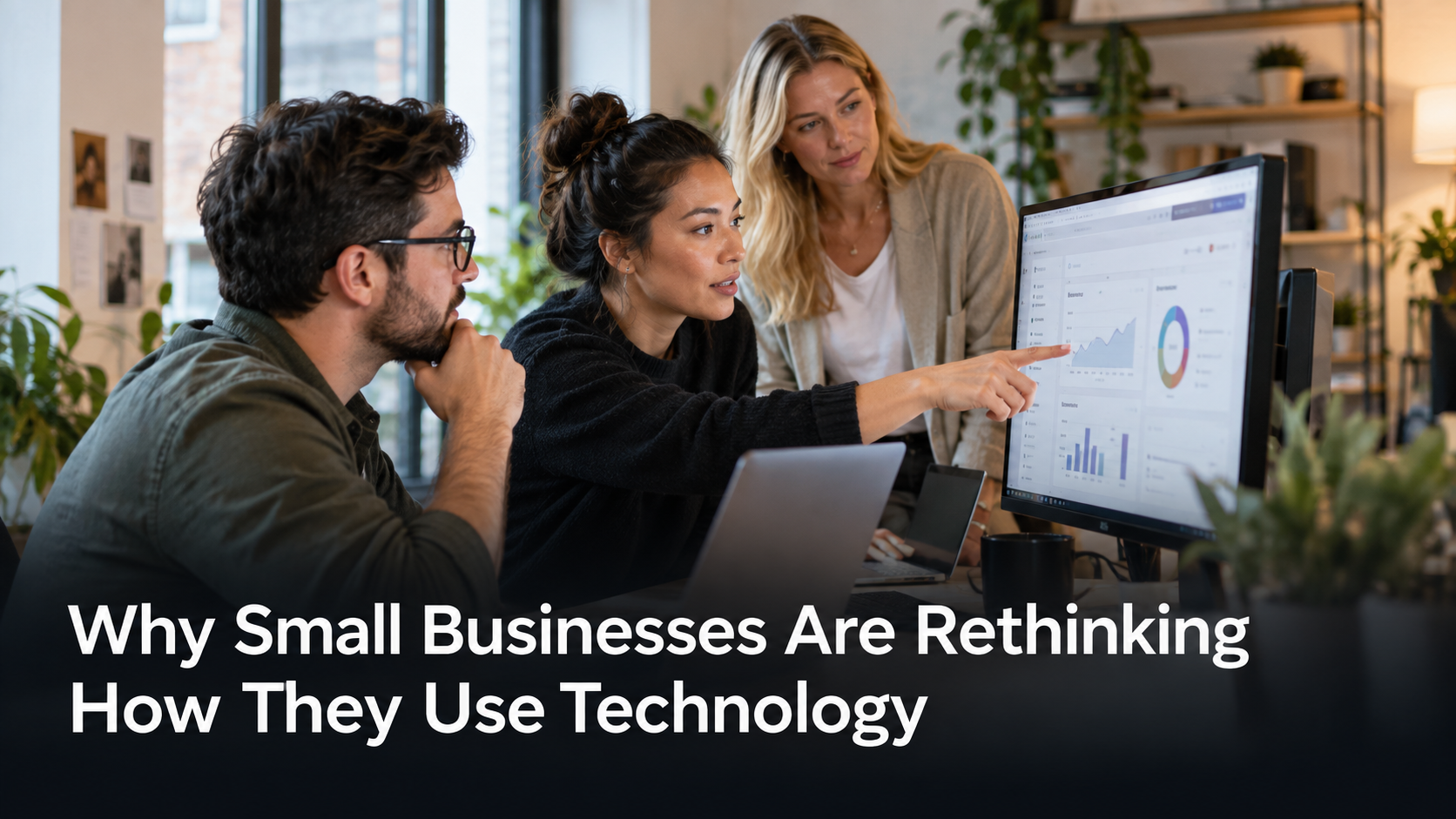
Technology is no longer something small businesses adopt simply because competitors are doing it. For many companies, digital tools have become an essential part of everyday operations, from communicating with customers to managing payments, marketing and internal workflows.
The biggest change is not necessarily the amount of technology being used. It is the way businesses are choosing it.
Instead of purchasing complex software with dozens of features, many smaller companies are focusing on tools that solve one clear problem and produce a measurable benefit.
Moving Away From Technology for Technology’s Sake
A few years ago, digital transformation became a popular phrase across almost every industry. Businesses were encouraged to move operations online, automate processes and use new platforms.
However, more technology does not automatically mean better productivity.
A company can easily end up managing multiple subscriptions, dashboards and systems that create additional work instead of reducing it.
This is why many business owners are now asking simpler questions before adopting a new tool.
Does it save time?
Does it reduce manual work?
Does it improve customer experience?
Can employees actually use it easily?
These questions often matter more than the number of features a platform offers.
Automation Is Becoming More Practical.
Automation is another area that is becoming increasingly accessible to smaller companies.
A business does not need a complicated enterprise system to automate routine tasks.
Simple automation can help with activities such as appointment reminders, invoice generation, customer enquiries, follow-up emails, inventory alerts and reporting.
When implemented carefully, automation can allow employees to spend more time on tasks that require judgement, communication or creativity.
The key is to automate repetitive work rather than attempting to automate every part of a business.
Customer Expectations Are Changing
Customers increasingly expect businesses of all sizes to provide convenient digital experiences.
That may include online booking, quick payment options, clear website information or faster communication.
A small local business may not need the same technology infrastructure as a large corporation, but customers still compare experiences across different companies.
This makes a reliable website, responsive communication and simple digital processes increasingly important.
Data Can Help Smaller Companies Make Better Decisions
Another major advantage of digital tools is access to useful business data.
Even relatively simple platforms can provide information about customer behaviour, sales patterns, website traffic or marketing performance.
The challenge is avoiding unnecessary complexity.
Businesses often benefit more from tracking a handful of meaningful indicators than collecting large amounts of information that nobody regularly reviews.
For example, a company might focus on enquiries received, conversion rate, average order value, repeat customers and marketing cost.
These figures can provide a clearer picture of business performance.
Cybersecurity Also Deserves Attention
As small businesses become more dependent on digital systems, security becomes increasingly important.
Basic measures such as strong passwords, multi-factor authentication, regular software updates and reliable backups can reduce many common risks.
Employees should also understand how to recognise suspicious emails, links and login requests.
Security does not need to become an overwhelming technical project, but it should be treated as part of normal business operations.
Choosing Technology With a Clear Purpose
The most effective technology strategy for a small business is often surprisingly simple.
Start with the business problem.
Then look for the simplest reliable solution.
Instead of asking which technology is currently popular, businesses can ask which tool will make a specific process faster, easier or more useful.
That approach helps companies avoid unnecessary complexity while still benefiting from new technology.
For small businesses, the future of technology may not be about having the most sophisticated systems. It may be about choosing fewer tools and using them better.

